SOCIAL IMPACT
No one should suffer just to make clothes. Period. Yet millions of garment workers are systematically exploited in the pursuit of cheap production. This pillar is about ensuring everyone touched by our value chain is treated with fairness, dignity, and respect. Because true sustainability puts people at the heart of business.
The industry employs approximately 60 million factory workers worldwide yet less than 2% earn a living wage. Garment workers can endure unsafe conditions, wage theft, exhausting hours, minimal pay, and gender-based harassment. We refuse to be part of this.
Through living wage projects, strong supplier partnerships, and proactive approaches to worker well-being, we’re working to change what we can control. Products made with fairness. Products made with respect. Products that don’t exploit people.
2025 SNAPSHOT
supplier trainings
of production volume where the member company pays its share of the living wage estimate
grievance mechanism investigations for remediation
total investment into living wage
OUR GOALS
Our aim is for every person to be treated and paid fairly, in dignified working conditions across our supply chain, and ensuring our business practices set the right environment for this. We track this through one long-term Moonshot vision, with clear measurable targets from 2025-2027. Here is our status in 2025.
08 FAIR WAGES FOR FAIR WORKING CONDITIONS
Our vision is to ensure fair wages for fair working conditions in our supply chains through responsible purchasing practices.
THE WORK BEHIND OUR IMPACT
Read on to explore the strategies, projects and partnerships behind our progress.
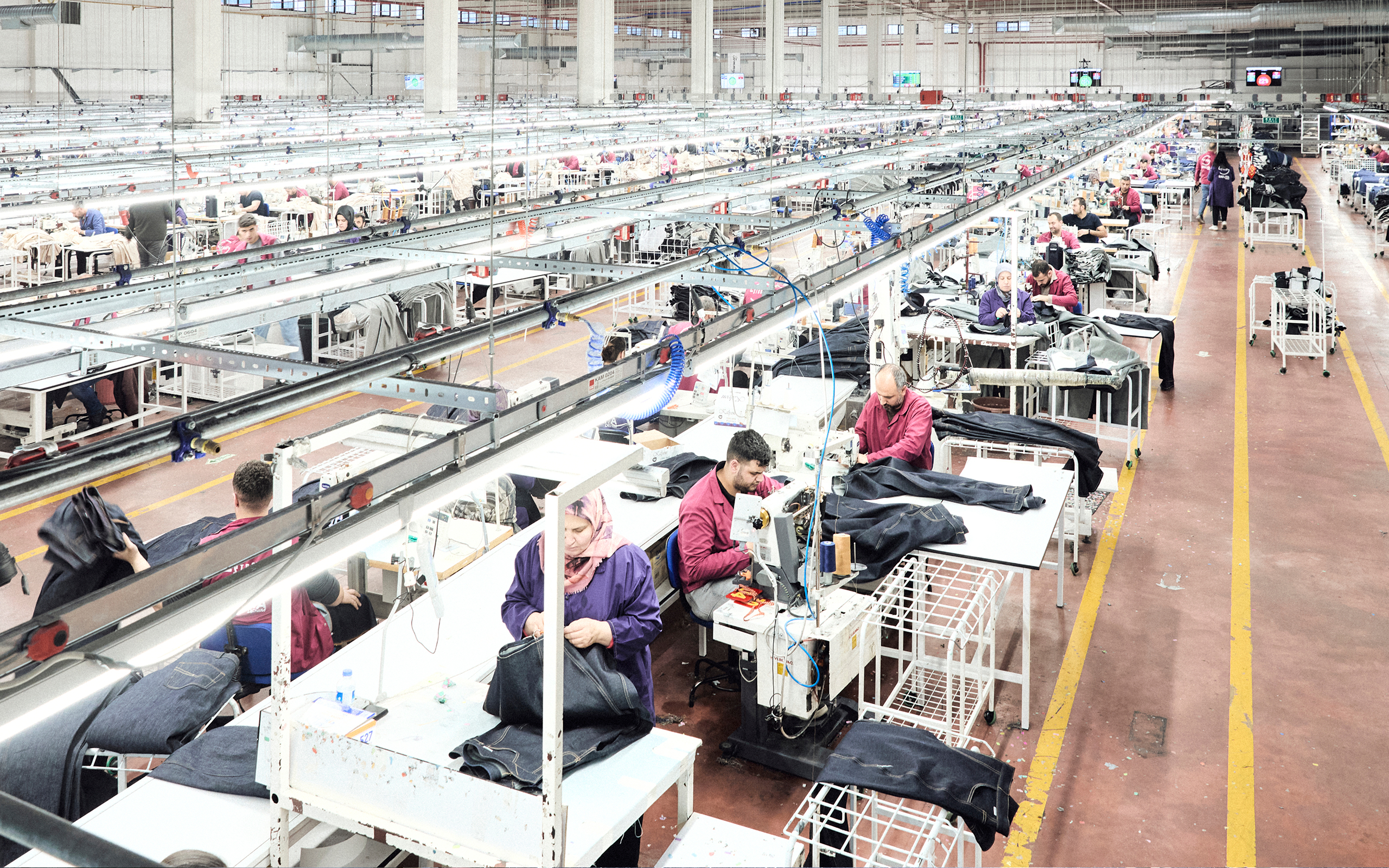
OUR APPROACH TO HUMAN RIGHTS DUE DILIGENCE
Fashion should never cost human dignity. For 18 years, that’s been our foundation.
What Is Human Rights Due Diligence and Why It Matters.
Human Rights Due Diligence is a systematic process for identifying, preventing, and addressing human rights risks in a company’s operations and supply chain. For fashion brands, this matters because garment production involves complex global supply chains where workers often face risks like unfair wages, unsafe conditions, excessive overtime, and restricted freedom of association. Without structured due diligence, these harms can go undetected and unaddressed.
OUR APPROACH
We follow OECD and UN guidelines for Human Rights and Environmental Due Diligence through a structured six-step cycle. Our approach combines core processes—transparent pricing, rigorous onboarding, clear policies through our Vendor Manual—with a systematic risk identification and management system. This applies to all Tier 1 suppliers (final assembly) and their subcontractors. We don’t do this alone. We’re members of the Fair Wear Foundation, an independent organization that helps us identify risks, manage issues, and review our progress.
OUR DUE DILIGENCE SYSTEM IN PRACTICE
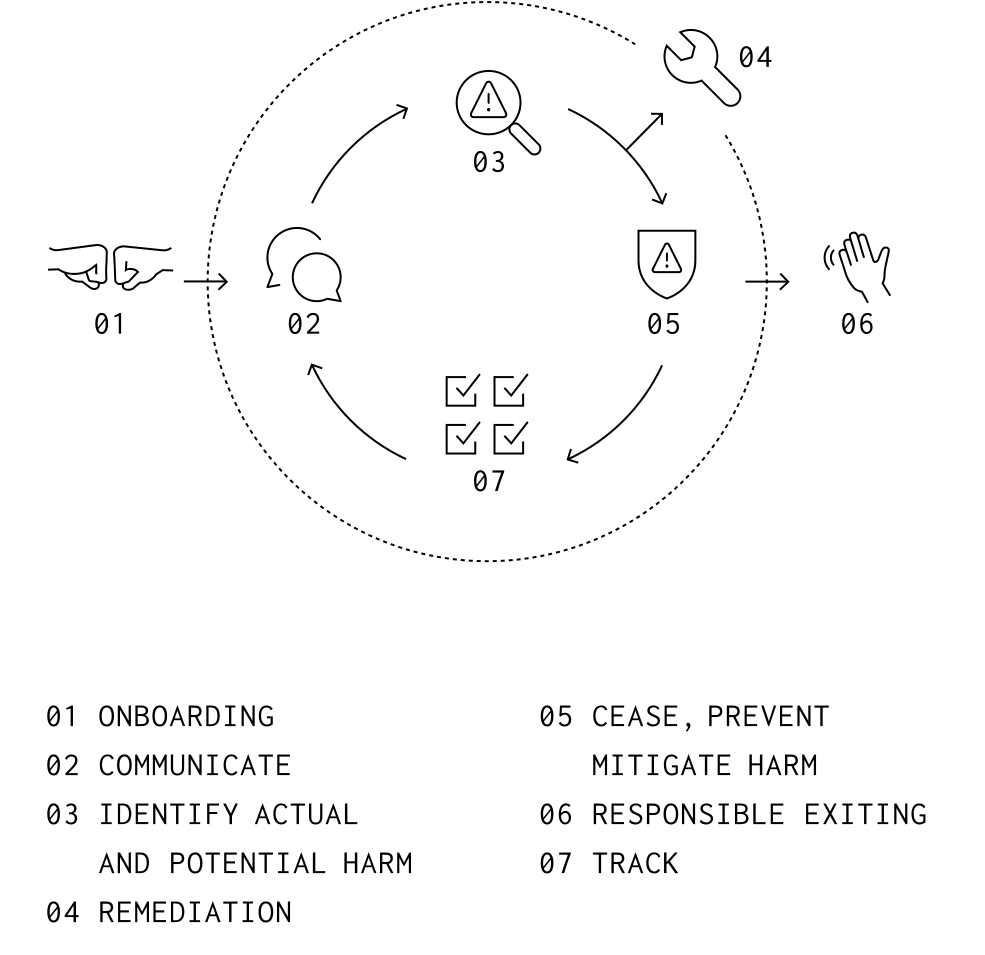
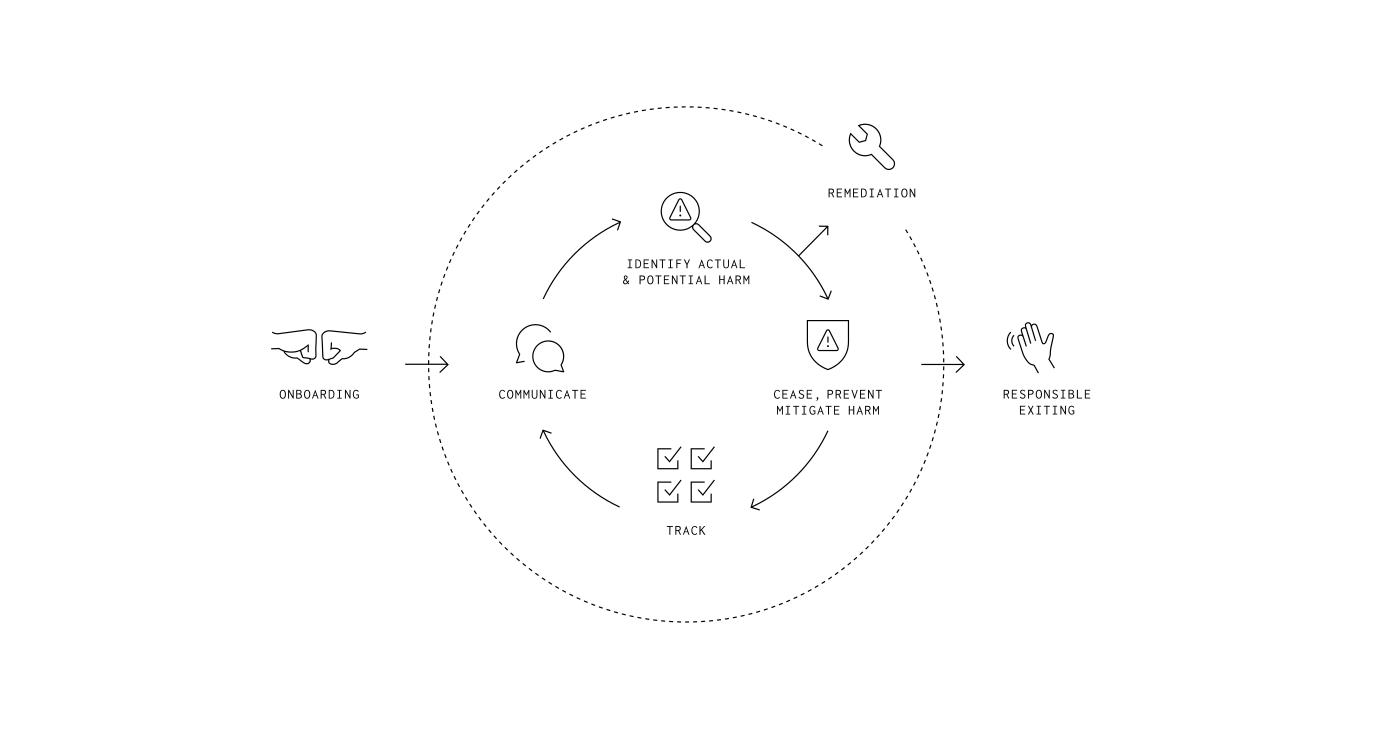
Our human rights due diligence is built around an integrated system of interconnected processes — from the standards we set and how we onboard suppliers, to how we monitor performance and ensure workers have a voice. Explore each component
SUPPLIER PROFILES
Human rights risks aren’t uniform across our supply chain. They vary by country, by region, and by facility. Labor laws, enforcement, minimum wages, union rights; these all differ depending on where production happens. That’s why we assess country-specific risks and profile each supplier individually.
Learn more about our suppliers and country risk profiles, where we outline the information, identified risks and improvement plans.
Key information to note:
- The factory significant risk score is a combination of likelihood (dependent on how widespread the potential harm is) and severity (depends on scale, scope and remendability of the potential harm). 1 = low and 5 = high.
COUNTRY RISK PROFILES
COUNTRY RISK PROFILES
Germany
Labor Rights Overview
Germany has high labor standards supported by European regulations, but persistent risks remain in sectors such as garment and manufacturing. According to the ITUC Global Rights Index, Germany has a rating of 1, reflecting sporadic violations of rights, while the Civicus Monitor rates civic space as ‘Obstructed’ for 2025, indicating ongoing concerns regarding workers’ rights. These include discrimination in hiring, unequal compensation, unpaid overtime, and workers being paid below a living wage. Despite a robust legal framework, further improvements in worker rights and conditions are still needed.
Gender Spotlight
Gender inequality risks exist but are comparatively lower in this sourcing country. Potential issues include occupational segregation and challenges for working parents balancing care responsibilities with work schedules. One issue where Germany lies behind other EU countries is the gender pay gap, having a higher one on average. The causes of the gender pay gap can vary: for example, women tend to work in lower-paid jobs or are less likely than men to reach management positions. Some women also receive less pay from their employers even though their job, educational background, and employment history are comparable to those of their male colleagues.
Portugal
Labor Rights Overview
Portugal has high labor standards and effective institutions that support compliance. However, issues such as health and safety, working hours exceeding legal limits (but not over 60 hours), and lack of democratic election of union representatives persist.
Gender Spotlight
Historically, legal gender-based discrimination, unequal wage rates and job segregation based on gender have combined to create deep-seated practices that have resulted in women being paid less than men for the same and comparable work, or work of equal value, and in women’s confinement to lower paid jobs with fewer opportunities for promotion. As a result, their pensions and entitlements to social protection are also lower than those of men.
Romania
Labor Rights Overview
Romania, a high‑income country, has made notable economic progress; however, recent shocks—including the COVID‑19 pandemic and the war in neighbouring Ukraine—have disrupted this trajectory. These events have contributed to rising poverty, persistent disparities in economic opportunity, significant gender gaps in labor force participation and employment.
Romania has an ITUC Global Rights Index rating of 3, indicating regular violations of rights and a civic space rating of ‘Narrowed’.
Most common risks include social dialogue, which remains limited overall, particularly beyond the factory level. The landscape of labor representation has remained largely unchanged since 2021. Five major national trade union confederations continue to operate without significant differences in doctrine, sectoral coverage, or composition. However, sectoral‑level collective bargaining agreements (CBAs) are absent in the private sector and the TCLF industry. Most bargaining occurs at company level, where CBAs apply to all workers in factories with more than 10 employees and may be negotiated with trade unions or worker representatives when employees are not unionized. Other risks include workplace violence and harassment, health and safety and workers wages not reaching a living wage.
Gender Spotlight
Women make up roughly 90% of the workforce in Romania’s garment and textile sector, yet they remain concentrated in low‑paid, low‑skilled positions with limited opportunities for advancement, reflecting broader gender disparities in labour market participation and access to opportunity. The absence of sectoral‑level collective bargaining, combined with weak social dialogue beyond the factory level, disproportionately affects women—especially those in precarious, migrant, or temporary roles—who rely on company‑level CBAs for protections related to wages, job security, work–life balance, and effective representation. According to the Global Gender Gap Report (2024), 33% of women (aged 18-74) have experienced sexual harassment at work by any perpetrator since age 15.
Türkiye
Labor Rights Overview
Türkiye faces significant challenges in labor rights, particularly for unregistered workers, including refugees. The country has an ITUC Global Rights Index rating of 5, indicating no guarantee of rights, and a civic space rating of ‘Repressed’, reflecting severe restrictions on freedoms and protections. Key risks include evidence of workplace violence or harassment, obstructions to rights regarding freedom of association, like factory management does not allow trade unions to approach workers or mistreats workers due to their union membership. Despite ratifying three ILO conventions, Türkiye continues to face criticism from the ILO and the EU for failing to meet international standards on freedom of association and the right to collective bargaining. Ongoing economic pressures further exacerbate these challenges, pushing some employers toward improper labor practices. The minimum wage remains significantly below living‑wage estimates. Further harms include forced overtime and wages not meeting living wage and findings show that statutory leaves are not paid to workers as legally required.
Gender Spotlight
While registered work in the textile and garment sector is increasing and women hold a significant amount in the employment, research indicates that informal employment persists, increasing harms regarding social security, workplace safety and more. Overall, gender inequality is a systemic issue in Türkiye’s garment. Evidence points to persistent risks such as workplace violence and harassment, discriminatory hiring and promotion practices, and gender pay gaps. Gender‑based violence and harassment often go unreported due to stigma or lack of confidential channels. Gender related health and safety issues include inadequate access to clean, private toilets or sanitary materials undermines wellbeing; many health and safety policies overlook reproductive health and other gender‑specific needs, including menstruation, pregnancy, and exposure to harmful chemicals.
Tunisia
Labor Rights Overview
Tunisia is a major garment supplier to the EU. Although the country has made progress in aligning with international labor standards, ongoing political instability and economic challenges continue to affect labor conditions and enforcement mechanisms, contributing to a shift toward shorter‑term employment contracts. Tunisia has an ITUC Global Rights Index rating of 5, indicating no guarantee of rights, and a civic space rating of ‘Repressed’, underscoring significant constraints on freedom of association and worker protections.
Key risks include wages well below living‑wage benchmarks, excessive overtime often without proper premium payments; no payment during downtime or work stoppages and workers being dismissed and rehired to avoid paying wages for permanent workers. Additional concerns include inadequate health and safety conditions, weak worker representation structures, and discriminatory workplace practices.
Gender Spotlight
Gender inequality is a structural and persistent issue in Tunisia. Women face a high unemployment rate and often earn below living wages; face elevated risks of harassment, gender‑based violence, and discrimination in hiring and promotion. They are often concentrated in lower‑paid positions and may face barriers to reporting grievances due to fear of retaliation or a lack of effective mechanisms. Occupational health policies frequently fail to address reproductive and other gender‑specific needs.
Morocco
Labor Rights Overview
Morocco is a key garment supplier to Europe but faces persistent challenges in labor rights enforcement. The country has an ITUC Global Rights Index rating of 3, indicating Regular violations of rights, and civic space is considered ‘Obstructed’ for 2025. While Morocco has ratified the ILO Minimum Wage Fixing Convention (C131), it has not ratified the Protection of Wages Convention (C095), and compliance with minimum wage laws and other statutory entitlements remains inconsistent.
Consequently, harms include allowances, bonus or social security benefits are not paid as legally required; factory delays paying workers when they decide to resign, they make unauthorized deductions from workers’ wages non-payment of living wage and further wage related harms. Collective bargaining coverage is limited, and labor inspections are insufficient to ensure compliance. Therefore, violations of health and safety measures are widespread.
Gender Spotlight
Women in Morocco’s garment sector face heightened vulnerability. They are often employed in temporary or home-based work and are concentrated in low-paid, low-power positions with precarious contracts, increasing the risk of layoffs. Social norms and structural barriers perpetuate inequalities. Gender-specific risks include wage gaps, sexual harassment, and limited access to grievance mechanisms. Rural girls may be recruited into domestic work under conditions of forced labor, while boys face similar risks in apprenticeships in artisan or construction sectors. Despite recent initiatives to address gender inequality, progress remains slow and uneven.






LIVING WAGE PROJECT: A YEAR OF LEARNING
It is only fair if it is fair for everyone. We want to take responsibility, which means the prices we pay must make fair wages possible at our suppliers. ARMEDANGELS doesn’t pay wages directly (we don’t own factories), but we do pay prices for garments. Those prices can and should enable living wages.*
[*A living wage meets the basic needs of workers and their families and provides some discretionary income. Basic needs include housing with electricity, nutrition, clothing, healthcare, education, drinking water, childcare, transport, and savings]
Updates on our Pilot Project
Since Spring 2022, we’ve run a unique pilot project with three like-minded brands and our shared supplier Mergü in Türkiye. The idea is simple: come together as brands, not competitors, and work toward the same outcome of improving garment workers’ lives and advancing industry standards. We each pay our share toward a defined target wage.
Mergü uses the Fair Price App from Fair Wear Foundation to calculate labour minute costs for actual wages and for a pre-defined living wage (advised by Türk-Is union and agreed upon with all project partners). The difference between actual wages and the living wage benchmark is paid out as a bonus every season. Mergü then distributes it to workers and employees.
RESPONSIBLE PURCHASING PRACTICES WORKSHOP
STRONG RELATIONSHIPS START WITH US
You can try to fix something that’s already broken with glue and tape, but the most important thing is not breaking it in the first place. In the garment industry, that means building strong relationships from the start.
Most sustainability work in fashion focuses on remediation. Audits identify problems. Action plans address violations. But what if we focused on prevention instead? What if we made sure our own practices as a brand didn’t create the conditions for harm in the first place?
In 2025, we organised a Responsible Purchasing Practices workshop to discuss and workshop exactly this. Senior Managers and Directors from across the business, from supply chain to product management to design, quality, and buying, all came together to learn how their daily decisions directly impact workers in our supply chain.
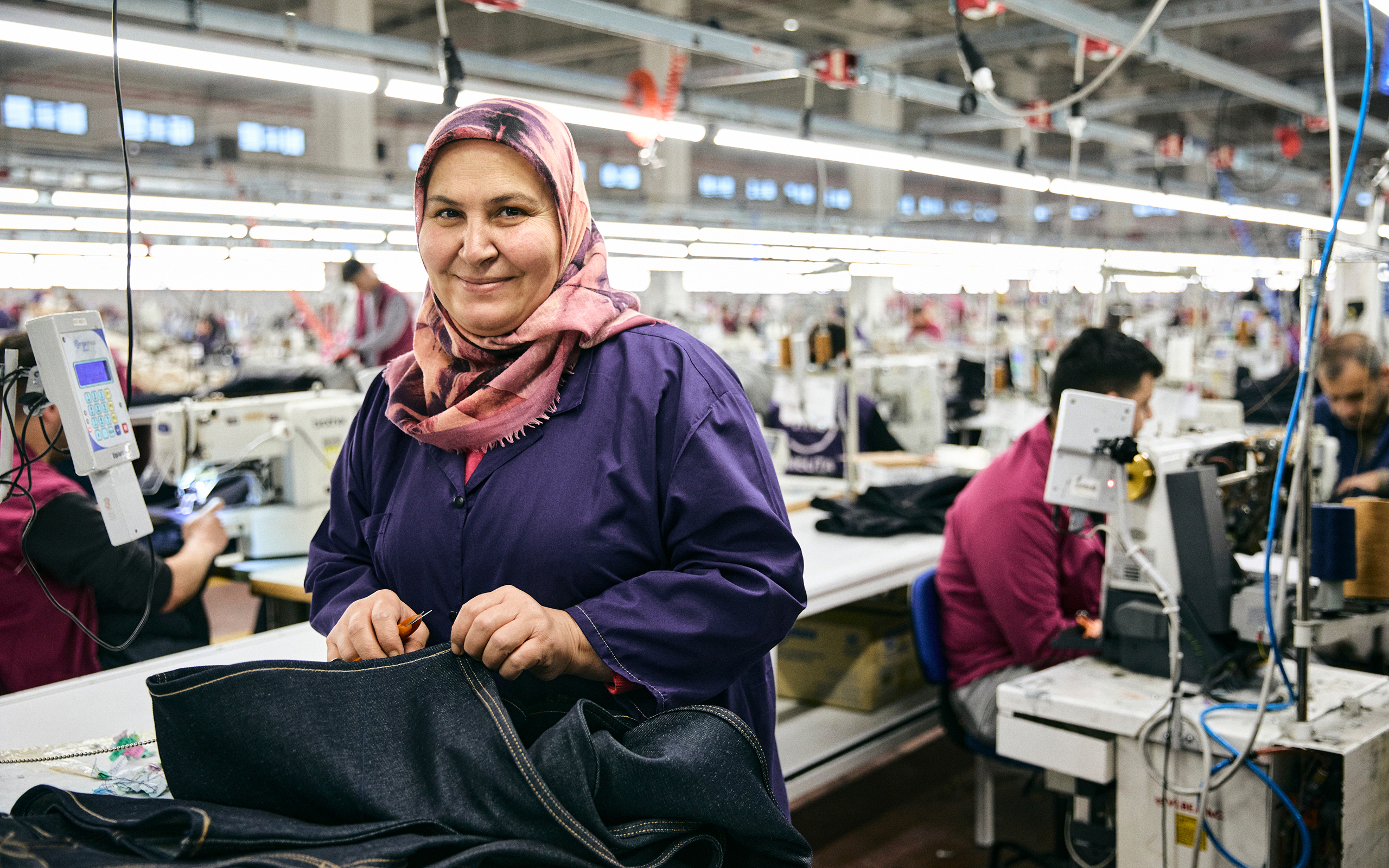
SUPPLIER SPOTLIGHT: BECRI’S GENDER EQUALITY PROGRAM
Why Gender Equality Matters in Fashion
Women make up approximately 60- 80% of garment workers globally. This means that when we talk about protecting human rights in our industry, we must specifically consider the rights of women.
Many of the issues facing garment workers, like low wages and precarious employment, disproportionately affect women.
Manufacturing partner
This is why we are particular fans of our Portuguese manufacturing, Becri, and it’s gender equality programme. Gender equality is not a side project at Becri Group — it is a structured, ongoing commitment aligned with the United Nations Sustainable Development Goal 5. With a clear focus on inclusion, empowerment and equal opportunity, Becri has developed a dedicated Gender Equality Activity Plan that translates global principles into concrete action on factory level.