

CLIMATE ACTION
Climate change is the defining challenge of our time, and the textile industry is part of the problem. Every garment carries a carbon footprint, from fiber production to manufacturing energy to transportation. The stakes are existential. Global warming surpassed 1.5 degrees Celsius for the past three years, meaning Earth is currently on track to breach the Paris climate agreement by the end of the decade.
The greenhouse gas emissions associated with the total production of raw materials for the apparel, home textiles, and footwear industry have risen by 20% over the past five years. It is scary, but we can’t put our head in the sand.
This strategic pillar focuses on carbon measurement and decarbonisation supporting us to build a pathway to lower-emission production. Our mission to help people fight the climate crisis, and that starts with taking responsibility ourselves. Products with lower-emissions. Products with accountability. Products that don’t cost the planet.
2025 SNAPSHOT
decrease of footprint per kg of product compared to last year
tCO₂e 2025 total carbon footprint
average renewable energy across all direct suppliers
suppliers at 100% renewable energy
OUR GOALS
Our aim is for every product to be made from high-quality lower-impact materials, designed for recycling and longevity, and produced without excess. We track this through three long-term Moonshot visions, with clear measurable targets from 2025-2027. Here is our status in 2025.
06 NET ZERO
Our vision is to be a net zero business, taking full responsibility for our carbon footprint.
07 ZERO TOXIC CHEMICALS
Our vision is to ensure zero discharge of hazardous chemicals, preventing wastewater and air contamination, while recovering chemicals and water.
THE WORK BEHIND OUR IMPACT
Read on to explore the strategies, projects and partnerships behind our progress.
CLIMATE ACTION
At ARMEDANGELS, climate action is not a side project but a business imperative. We aim for transformation, not compensation through offsets. This all aligns to our Impact* Roadmap North Star: decouple business growth for environmental footprint.
Our 2025 carbon footprint showed us that over 99% of our emissions lie in the materials we use, the suppliers we work with, and the products we put into the world. This is where the biggest opportunities for impact occur.
This year we focused on establishing our decarbonization with Science-Based Targets Initiative to understand our long-term strategy.
DECARBONIZATION JOURNEY
SETTING SCIENCE-BASED DECARBONIZATION TARGETS
Understanding our carbon footprint is the first step. Reducing it is another and the next part of the journey. In 2025, we made progress in this, by establishing and setting our targets and decarbonization roadmap – currently being verified by the Science Based Targets Initiative (SBTi).
WHY SBTI?
The Science Based Targets initiative (SBTi) validates that a company’s climate targets are aligned with limiting global warming to 1.5 °C. That’s the threshold scientists have identified as critical: beyond 1.5°C, we face more extreme weather, ecosystem collapse, and widespread harm to communities worldwide.
It is a global baseline standard for decarbonization, with more than 10,000 organisations globally committed with SBTi to reduce carbon emissions. By committing to SBTi, we future-proof our partnerships, improve commercial terms, and show up as a credible, serious brand in an industry under pressure to decarbonize.
TARGETS
In the technical terms, our near-term carbon targets are:
- ARMEDANGELS commits to reduce absolute scope 1 and 2 GHG emissions 42.0% by 2030 from a 2022 baseline.
- ARMEDANGELS also commits to reduce scope 3 GHG emissions from purchased goods and services, fuel- and energy-related activities, upstream transportation and distribution, business travel and employee commuting 51.6% per kg of products by 2030 from a 2022 baseline.
In real talk, this means:
By 2030, every kg of product we produce needs to carry roughly half the carbon footprint it did in 2022. Over 99% of our emissions live in our supply chain, in the fibers, factories, and processes behind every garment. That is exactly where our focus is.
Currently, when we look at our progress in 2025 against the decarbonization targets, we only achieved a small 3.07% decrease in emissions (in kg of products) compared to the 2022 baseline. With the 51.6% decrease by 2030 swiftly approaching, like many businesses, we need to fast track our approach to decarbonization to achieve the milestone of a 32.25% reduction by the end of 2027.
Our decarbonization targets are in the process of SBTi validation.
SUPPLIER RENEWABLE ENERGY: A CRITICAL LEVER
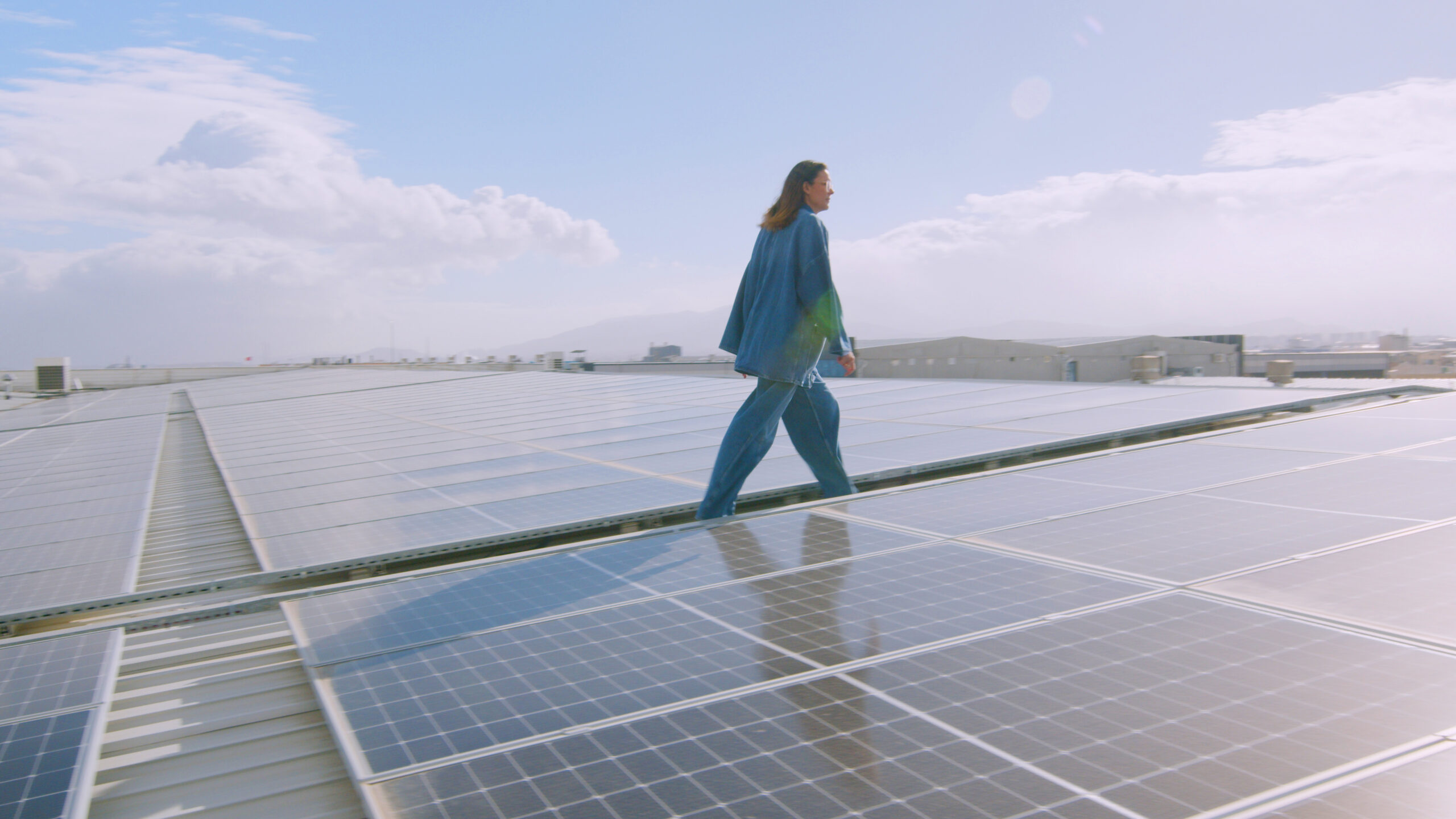
With 99.7% of our emissions sitting in Scope 3, the energy our suppliers use to manufacture our products is one of the most significant levers we have for decarbonization. When a factory runs on fossil fuels, that carbon is embedded in every garment it produces. Transitioning our supply chain partners to renewable energy is therefore central to our ability to hit our SBTi targets.

THE SAME T-SHIRT, DIFFERENT FOOTPRINTS
A t-shirt is a t-shirt, right? Not when it comes to carbon. Material choices — fibre type, recycled content, processing methods — change a garment’s environmental impact. As you’ll see from the comparison, the recycled cotton t-shirt has a lower footprint, which is why we continue to focus on increasing the use of quality recycled materials across our entire range.
As the graphs show, the more recycled content we add to the t-shirt, the lower the carbon footprint. 100% Organic Cotton vs 100% Recycled Cotton goes from 6.5 kgCO₂eq to 5.0 kgCO₂eq, illustrating the importance of material choice when it comes to lowering the individual carbon footprint of garments.
DEEPENING OUR CHEMICAL MANAGEMENT SYSTEM
Becoming a ZDHC Signatory Friend
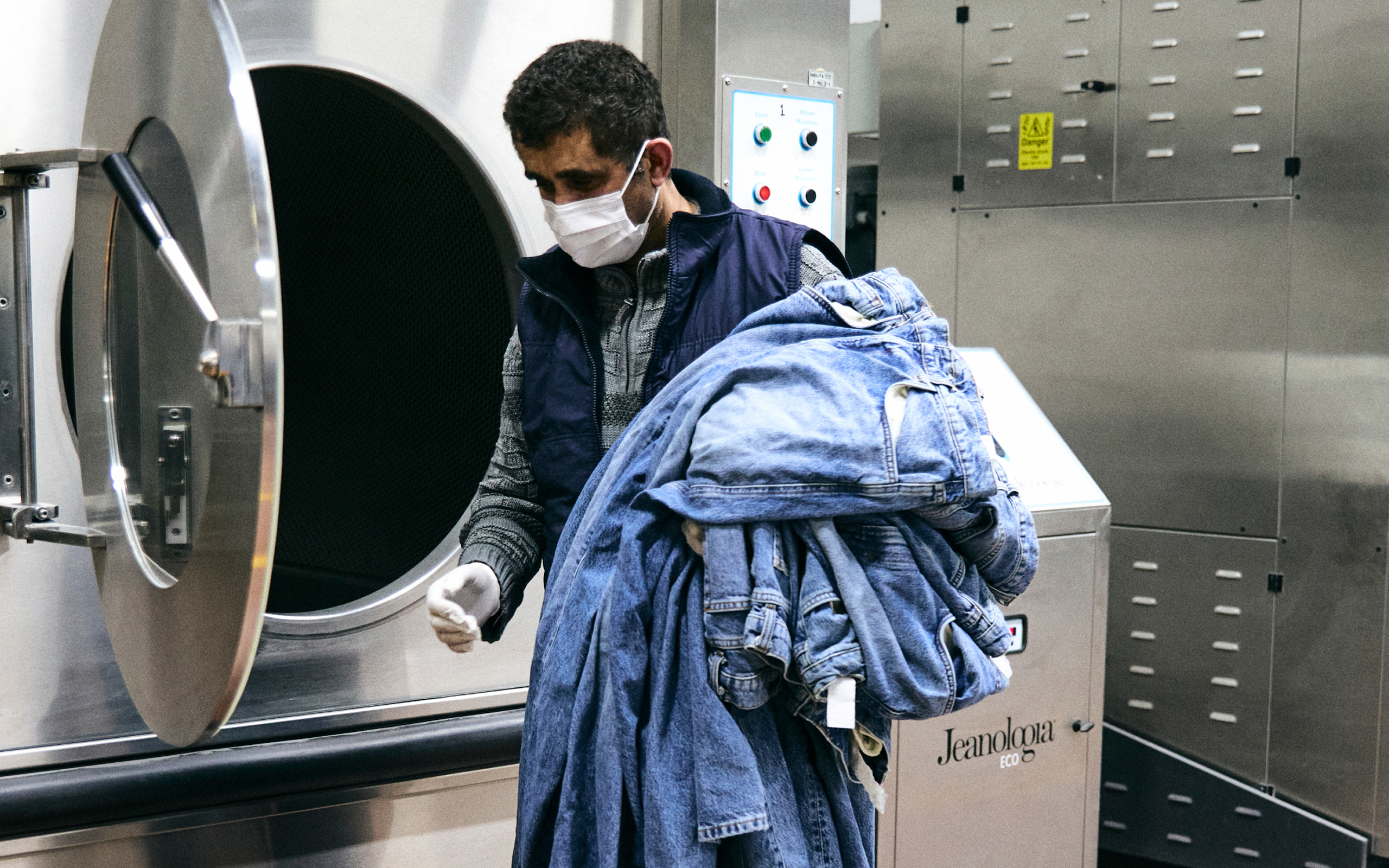
Textile production uses a lot of chemicals. Dyeing, printing, washing, finishing – all of these processes involve substances that can contaminate wastewater and harm both ecosystems and workers if not managed properly.
We have been using the robust GOTS and GRS certifications to ensure chemicals are managed in an appropriate way which mitigates risk to environment and people. As with everything, there is always room to improve. Despite all our products being produced in line with GOTS/GRS standard, only 60.6% in 2025 can be certified – therefore gaps were there we wanted to fill.
WHAT WE DID IN 2025
This is where ZDHC comes in. Zero Discharge of Hazardous Chemicals is a global industry program that sets standards for safer chemical management in textile manufacturing. In 2025, ARMEDANGELS became a ZDHC Signatory Friend, committing to their Manufacturing Restricted Substances List (MRSL) across our supply chain.
We joined because ZDHC covers an entire facility (not just our orders). The chemical reports we’ll receive by being part of ZDHC prove suppliers are not using the 191+ banned substances on ZDHC’s restricted list, adding another layer to our chemical management approach. ZDHC fills the gaps where GOTS or GRS don’t apply, ensuring chemical safety across 100% of our production range, including products that fall outside certification due to material blends.
We connected with wet-processing suppliers already active on the ZDHC Gateway, creating visibility into their chemical management practices. In 2026, we update our Vendor Manual with these enhanced requirements.